 It is only a matter of time before the true effects of the Local Government Amendment Act 2024 (WA) will begin to be felt.
Taking a helicopter view of the amendments, away from black-and-white legal analysis, we find that Parliament now expects more and better from local governments.
This article takes a brief look at some of those expectations.
Under section 2.10(1)(a) of the Local Government Act 1995 (WA), it is no longer enough to represent the interests of electors, ratepayers and residents.
A councillor must now take ‘account of the interests of other persons who work in, or visit, the district’.
The provision requires councillors to take a broader view of their district and think beyond parochial tendencies.
This could be as simple (or as complex) as engaging in debate about whether the latest project takes enough account of those who only work in the district, or who are visiting it.
Councillors now have a basis to resist the call to consider only those who elected them, when exercising their vote in council.
Section 2.10(1)(c) has been amended to be more specific than its predecessor. It now reads, ‘A councillor – facilitates communication with the community about council decisions’. The key difference is the words, ‘about council decisions’.
This removes the previous ambiguity which seemed to encourage some councillors to interpret ‘facilitate communication between the community and the council’ too broadly.
Some councillors might have formed the belief that they had a legislated permission to:
One wonders whether this provision was prompted by the increasing number of councillors airing their views on social media. Those views have sometimes been controversial, defamatory or upsetting to members of the community.
The new wording seeks to answer the question about what the ‘communication’ councillors facilitate ought to be about. The answer limits it to being ‘about council decisions’.
A reasonable and good faith interpretation would seem to mean that ‘communication’ mandated by section 2.10(1)(c) here would not extend to situations such as:
On the other hand, communicating about a council decision would be a more objective exercise, involving:
Section 2.10(1)(d) is a completely new provision. It reflects Parliament’s expectation that councillors maintain ‘good working relationships with other councillors, the mayor or president and the CEO’. This provision introduces a statutory basis to motivate councillors to consciously develop their communication and interpersonal skills.
Councils can sometimes fall into a dysfunctional state. This is sometimes the result of a breakdown of relationships between councillors, or between councillors and the CEO. Section 2.10(1)(d) seeks to guard against this.
With the introduction of this sub-section, councillors must now pay attention to whether they are enhancing or damaging good working relationships.
The new provision gives councillors and the CEO a basis for addressing errant councillor conduct, with words like, ‘Cr A is reminded of the need to maintain good working relationships with other councillors as provided for in section 2.10(1)(d) of the Local Government Act’.
Notably, the provision includes a value judgment ‘good’ without identifying who is to have the power to exercise that judgment. Time will tell how this term will be interpreted.
One would have to search long and hard to find an Act elsewhere that contains so explicit a statutory expectation to get on with one’s colleagues.
The law touches on workplace relationships in statutes like the Fair Work Act 2009 (Cth) and the Industrial Relations Act 1979 (WA). Those statutes are designed differently though. They prohibit and penalise conduct that is not acceptable – things like harassment, bullying and unfair practices in the workplace.
However, section 2.10(1)(d) is not worded like that. It does not prohibit. Nor does it penalise. On the contrary, it encourages conduct that is acceptable. It creates norms. It is potentially groundbreaking to have a statutory provision drafted in this aspirational way.
Note that this should not be confused with the fact that there is a penalty under reg 35 of the Local Government (Administration) Regulations 1996 for failure to complete specified WALGA training under section 5.126 of the Act.
Under section 2.10(1)(f), councillors are required to maintain and develop the requisite skills to effectively perform their role.
In other statutes, Parliament demands a measurable level of skill or some benchmark. Lawyers must be admitted to the roll of the Supreme Court, motorists must hold a driving licence, doctors must have passed medical school, and so on.
But in Western Australia, local government councillors only need to ‘maintain and develop’ the requisite skills. There is no list of skills. Nor is there any test or benchmark or licensing requirement. Although it is a legislated responsibility, it is aspirational in nature. And it has the virtue of suggesting that skills acquisition and maintenance is a dynamic thing. It also makes perfect sense in the theory of democracy, as it is for voters to choose who they want in public office.
In any case, the days when councillors could be dismissive of training and treat it as optional are gone. It is now possible to say to a councillor, ‘Cr A, we hope you are aware that you have a legal responsibility under section 2.10(1)(f) to attend the training that has been scheduled for next month’.
A number of the 2024 legislative changes have great potential to influence the culture of local government councils for the better.
Awareness-raising programmes and councillor role training will be needed to convert the potential into real-world change.
But the resulting broader vision, more respectful behaviour, improved decision making and higher level of skills, will do much to promote positive perceptions of this level of government.
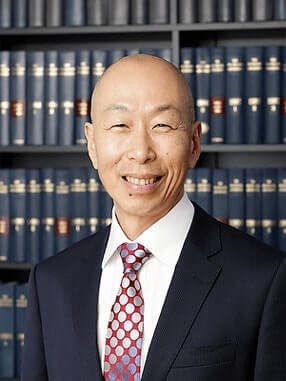
Managing Principal
Mob: 0421 302 541